Showing posts with label Food culture. Show all posts

Sunday, October 18, 2026

Korean Rice Cake Desserts: The 2026 Tteok Trend Taking Over Seoul

For years Koreans travelled across the country for famous bakeries. In 2026 the queue moved to rice cakes. Tteok, the chewy glutinous-rice cake Koreans have eaten for centuries, is now the dessert people line up for, and the big convenience-store chains are racing to put new versions on their shelves.
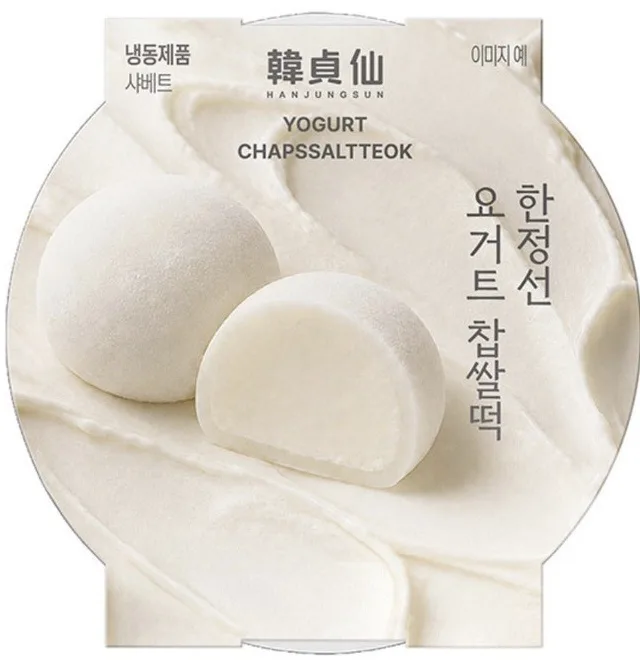
Hanjeongseon Yogurt Chapssaltteok
Hanjeongseon Yogurt Chapssaltteok 한정선 요거트 찹쌀떡
Lotte Wellfood Chewy Tteok Ice
Lotte Wellfood Chewy Tteok Ice 찰떡아이스
Lotte Wellfood Myeongga Chewy Tteok Pie
Lotte Wellfood Myeongga Chewy Tteok Pie 명가찰떡파이
Binggrae Tteok Bungeo Ssamanco
Binggrae Tteok Bungeo Ssamanco 떡붕어싸만코

From bread pilgrimages to tteok pilgrimages

Koreans have a word for crossing the country to visit famous bakeries: bbangji-sullye, the bread pilgrimage. In summer 2026 a new word joined it, tteokji-sullye (떡지순례), the tteok pilgrimage. Dong-A Ilbo reported open-runs and long waits at rice-cake dessert shops in late August. It also noted that online mentions of Buja Tteokjip, a rice-cake shop in Gongju, grew more than sixfold without the shop launching anything new.

Part of the pull is what Koreans call halmaenial: halmeoni (grandma) plus millennial. Younger Koreans are going back to the flavors their grandparents liked, such as roasted soybean powder, black sesame, mugwort and honey-fried yakgwa, and buying them in new forms.

Chapssaltteok you eat frozen

The biggest hit came from Hanjeongseon, a tteok shop that opened in Seoul's Seongsu district in 2023 and became known for not shipping its rice cakes at all. In September 2026 it teamed up with the convenience-store chain GS25 on a frozen yogurt chapssaltteok. Eaten frozen, it is closer to gelato. Left to thaw, it turns back into a soft, chewy rice cake.

Chosun Biz reported that it sold 100,000 on its first day, a record for a new ice-cream launch at GS25. A second flavor, pistachio, followed in October.

Pizza seolgi: rice cake as pizza dough

Seolgi (설기) is a fluffy white steamed rice cake, a classic for birthdays and celebrations. The newest twist uses it as a pizza base, topped with tomato sauce and cheese. Pizza Hut Korea launched its own version, and the convenience-store chain CU followed with a sliced-rice-cake take it calls Pizza Jeolpyeon. TV Chosun summed up the speed of it all: the Dubai chewy-cookie craze faded within about six months, and pizza seolgi is next in line.

Rice cake in ice cream and snacks

Korea's snack makers have hidden chewy tteok inside familiar products for years, and 2026 gave those lines new life. Lotte Wellfood's Chewy Tteok Ice wraps ice cream in a layer of glutinous rice cake. A black-sesame injeolmi version, made with a tvN variety show, sold out its first run of 500,000 early. Lotte also refreshed Myeongga Chewy Tteok Pie, its long-running pie with chapssaltteok inside, with new flavors.

Yakgwa and "yakketing"

Yakgwa (약과) is a flower-shaped cookie of wheat flour, honey and sesame oil, fried and soaked in syrup. Famous handmade yakgwa became so hard to get that Koreans coined "yakketing", yakgwa plus ticketing, after the race to buy concert tickets. In September 2026 the chain emart24 launched an exclusive mini yakgwa from Janginhangwa, one of the names behind that rush.

Butter tteok, a rich, buttery rice-cake dessert, is also on Korea's 2026 trend lists. EconomyTalk reported that GS25 was among the first chains to release one.

The flavors to know

You will see these words on Korean packaging this year:

Injeolmi (인절미): rice cake rolled in roasted soybean powder, nutty and lightly sweet. The flavor now shows up in bingsu bread, chocolate, Pepero and snack cakes.
Heugimja (흑임자): black sesame, roasted and ground. Several café chains added black-sesame lattes and desserts this autumn.
Ssuk (쑥): mugwort, an herbal green flavor common in traditional rice cakes.
Pat (팥): sweet red bean, the classic filling of chapssaltteok.

Chapssaltteok vs mochi

Both are made from glutinous rice, so they share that soft, stretchy chew. Chapssaltteok is the Korean name, and the classic version is filled with sweet red bean. The 2026 versions break from that: yogurt cream, pistachio, fruit and fresh cream fillings, and some are made to be eaten frozen.

How to try them

Most of these launches are limited runs, and they move fast. TV Chosun noted that Korean dessert trend cycles now run shorter than three months. If you are visiting Korea, the convenience-store chains GS25, CU and emart24 have been the quickest to bring tteok desserts from famous shops to their freezers and shelves, so the dessert aisle is the first place to look.

Sales figures are as announced by the companies and reported in Korean media. Where meokbogo.com lists label details for these products, they come from filings with Korea's Ministry of Food and Drug Safety (MFDS).

  • Dong-A Ilbo, "빵지순례 다음은 떡지순례", 2026-08-28: donga.com
  • Chosun Biz, Hanjeongseon yogurt chapssaltteok first-day sales, 2026-09-04: biz.chosun.com
  • Newsis, GS25 pistachio chapssaltteok, 2026-10-05: newsis.com
  • Meokbogo ORIGINAL, the Hanjeongseon story (Korean): meokbogo.com
  • Asia Economy, CU Pizza Jeolpyeon, 2026-10-06: asiae.co.kr
  • Newsprime, Pizza Hut pizza seolgi, 2026-10-08: newsprime.co.kr
  • TV Chosun, trend cycles and pizza seolgi, 2026-09-16: tvchosun.com
  • TF Media, Chewy Tteok Ice black-sesame injeolmi sellout: tfmedia.co.kr
  • Dong-A Ilbo, Lotte's long-running snacks in new flavors, 2026-07-14: donga.com
  • etnews, emart24 Janginhangwa mini yakgwa, 2026-09-09: etnews.com
  • EconomyTalk, "두쫀쿠 다음은 떡지순례", 2026-09-20: economytalk.kr
  • Newspim, black-sesame autumn menus and the halmaenial trend, 2026-08-27: newspim.com

More from Korean Snack Guide

Chapagetti vs Jin Jjajang: Korean Black Bean Noodles Compared

Nongshim Chapagetti and Ottogi Jin Jjajang offer variations of Korean black bean sauce instant noodles. When comparing the numbers per 100 g, Nongshim Chapagetti Big Bowl Noodle is the heaviest and saltiest option at 447 kcal and 992 mg of sodium. Nongshim Chapagetti Double Black is the sweetest with 6.9 g of sugar, while Ottogi Jin Jjajang is the lightest with 393 kcal per 100 g. The ingredient lists also differ. Chapagetti Big Bowl includes wheat flour, potato starch, palm oil and soy protein, whereas Jin Jjajang is based on fried noodles and sauce.

Instant jjajang noodles are a pantry staple in Korea, loosely inspired by the popular restaurant dish jjajangmyeon. Readers outside of Korea should note that packs sold outside Korea can differ from the domestic items detailed here.

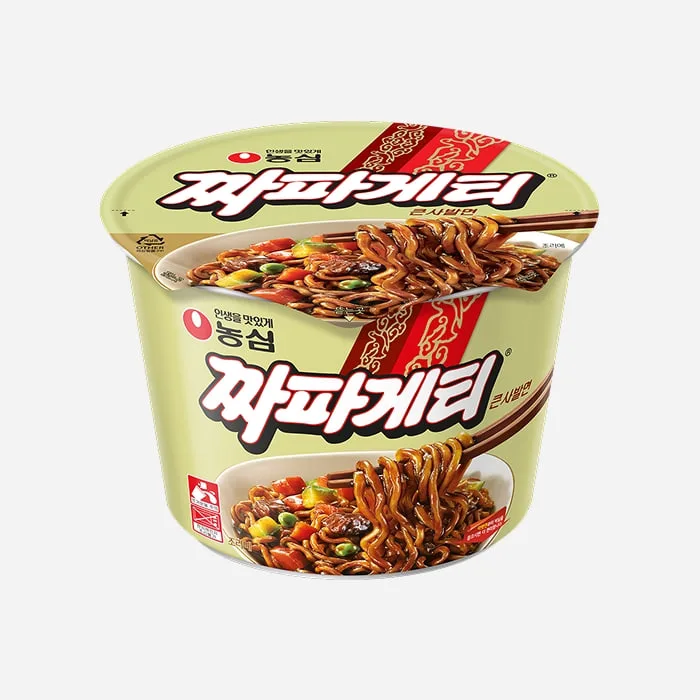
Nongshim Chapagetti Big Bowl Noodle
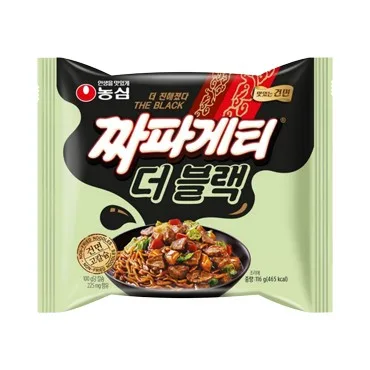
Nongshim Chapagetti Double Black
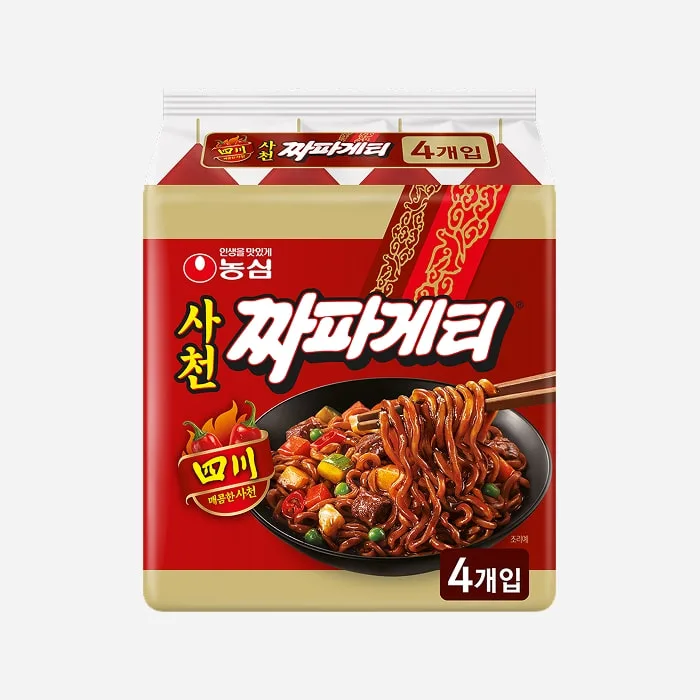
Nongshim Sichuan Chapagetti
Ottogi Jin Jjajang
Ottogi Jin Jjajang

The main differences

The Nongshim line provides several takes on the black bean flavor. Nongshim Sichuan Chapagetti brings a filling profile and lists flavored oil alongside its wheat flour and potato starch base. Nongshim Chapagetti Double Black has 71.55 g of carbs and 9.48 g of fat per 100 g, leaning on noodles and flavored oil for a salty and savory taste.

Ottogi Jin Jjajang provides a hearty option built on fried noodles and sauce. It carries 8.89 g of protein and 5.19 g of sugar per 100 g.

Who might prefer which

Readers looking for a salty and savory noodle might choose Nongshim Chapagetti Big Bowl Noodle or Nongshim Chapagetti Double Black. Those who prefer a filling option with lower sodium might favor Nongshim Sichuan Chapagetti, which has 788 mg of sodium per 100 g, or Ottogi Jin Jjajang, which sits at 815 mg per 100 g.

What to check on the label

Label ingredients vary across these options. Nongshim Chapagetti Big Bowl Noodle and Nongshim Sichuan Chapagetti list wheat allergens. The Big Bowl version also lists soy.

The labels for Ottogi Jin Jjajang and Nongshim Chapagetti Double Black list no specific allergens. None of the products in this group carry additional label flags.

The lineup

  • Nongshim Chapagetti Big Bowl Noodle 짜파게티큰사발면 — The heaviest and saltiest option in this group, featuring potato starch, processed fruit and vegetable products and soy protein.
  • Nongshim Chapagetti Double Black 짜파게티더블랙 — The sweetest variation per 100 g, relying on noodles and flavored oil to deliver a salty and savory taste.
  • Nongshim Sichuan Chapagetti 사천짜파게티 — A filling take that lists flavored oil, potato starch and wheat flour, with the lowest sodium level per 100 g.
  • Ottogi Jin Jjajang 진짜장 — A hearty option made with fried noodles that offers the lowest calorie count and highest protein per 100 g.

Nutrition and label flags, per 100 g

Every figure in the table comes from the product's own nutrition label as filed with Korea's Ministry of Food and Drug Safety (MFDS), per 100 g so packs of different sizes compare directly. An ingredient flag means that ingredient is written on the label. An empty flag means nothing of that kind is listed. It is not a certification and does not rule out shared production lines. These are the Korean-market versions; packs sold outside Korea can differ.

Productkcal
/100g
Sodium
mg
Sugar
g
Protein
g
Ingredient flagsAllergens listed
Nongshim Chapagetti Big Bowl Noodle
짜파게티큰사발면
4479926.5 8.13 none listed wheat, soy
Nongshim Chapagetti Double Black
짜파게티더블랙
4019666.9 7.76 none listed —
Nongshim Sichuan Chapagetti
사천짜파게티
4387885.84 8.03 none listed wheat
Ottogi Jin Jjajang
진짜장
3938155.19 8.89 none listed —

Source: product labels filed with the Korea Ministry of Food and Drug Safety (MFDS). Values per 100 g.

More from Korean Snack Guide

Thursday, September 17, 2026

Bichobi explained: Korea's biscuit-chocolate-biscuit, and the strawberry one

Bichobi is the Korean biscuit that keeps ending up in tourists' suitcases. Here is what it actually is, what is inside it, and why the strawberry version is the one worth hunting for.

If you have walked through a convenience store in Seoul in the last three years, you have passed a red box with a cartoon character on it. That is Bichobi (Korean: 비쵸비), made by Orion. It arrived in October 2022, sold out repeatedly, and has since turned into one of the snacks foreign visitors carry home by the boxful.

Orion Bichobi original chocolate pack showing the English name BICHOBI
The original. The pack prints BICHOBI CHOCOLATE in English, which is the easiest way to find it if you do not read Korean. Source: Orion (orionworld.com), used for product identification.

The name tells you the recipe

"Bichobi" is not a word in Korean. It is an abbreviation of the three layers of the snack: Biscuit – Chocolate – Biscuit. Two whole-wheat biscuits, and between them a slab of solid chocolate rather than a cream filling. The chocolate carries hazelnut, which is where the roasted, slightly savoury edge comes from.

That structure is the whole point. Most chocolate sandwich biscuits in a Korean convenience store use a soft cream. Bichobi uses a bar. You bite through a crisp layer, hit something that snaps, and then hit crisp again. Koreans describe the texture rather than the flavour when they recommend it, and that is a fair guide to what you are buying.

It was a hit in Korea long before tourists found it

The order matters, because it explains what you are actually buying. Bichobi was not designed as a souvenir. It went on sale in Korean convenience stores in October 2022 and became a domestic hit fast — fast enough that Orion could not keep up, and the product went missing from shelves. Korean coverage at the time put that down to younger shoppers, who took to the texture and passed it around.

Foreign visitors arrived at the story years later. The tourist surge shows up in Orion's own numbers only from 2024, and exports only from 2026. So when a Korean recommends this to you, they are not recommending a tourist product. They are recommending something that was already in their own bag.

You can still see the domestic pattern in where it sells. Orion's top ten selling locations now read like a transit map — Seoul Station, Jagalchi Market in Busan, Seokchon Lake in Jamsil, Gimpo and Incheon airports, Jeju. Those are places Koreans and visitors pass through together.

How big has this actually become

The numbers come from Orion's own announcements, reported in the Korean business press:

  • Launched October 2022. Supply ran short soon after release.
  • 17 million units cumulative by September 2024, with sales up 62% year on year for January–August 2024.
  • In tourist-heavy areas such as Seoul Station and Myeongdong, sales rose 360% over the same period — roughly six times the nationwide rate.
  • By April 2026, cumulative volume reached 33 million units and cumulative revenue 55 billion won.
  • Orion doubled the production line at its Iksan plant in April 2026, citing shortages and rising exports to the United States and Japan.
  • For January–August 2026, sales rose a further 53% year on year.
  • It reached the United States in January 2026 through Asian and Korean grocery stores, and is going into 37 Costco stores in Japan from October 2026, with Costco in the United States planned for early 2027. If you are reading this from the US, you may not need a trip to Korea — check a Korean grocery first.

The museum edition is the one people photograph

In late 2025 Orion put out a National Museum Edition wrapped in Korean heritage art, including Hojakdo — the tiger-and-magpie painting. That painting is reported to have inspired a character in KPop Demon Hunters, and the edition sold 300,000 units in its first month, with production raised to 600,000 to keep up. Bichobi's sales grew 80% in that quarter.

If you are hunting for a specific box to bring home, that is the one worth asking for by name.

Orion has said that posts about Bichobi in English, Chinese and Japanese tend to frame it the same way: good-looking packaging, easy to hand over as a gift. The company leaned into that, releasing packs illustrated with figures in traditional Korean dress for stores in visitor districts.

There is a second signal that does not come from the company. Bichobi is now listed by third-party sellers on Amazon and eBay under several spellings — Bichobi, Vichobi, Bischobi — which is usually what happens when demand runs ahead of official distribution. If you are searching for it from outside Korea, try more than one spelling.

The strawberry one is the one to look for

For almost three years Bichobi came in exactly one flavour. That changed on 4 September 2025, when Orion released Bichobi Strawberry as a limited edition — the first new flavour in the line.

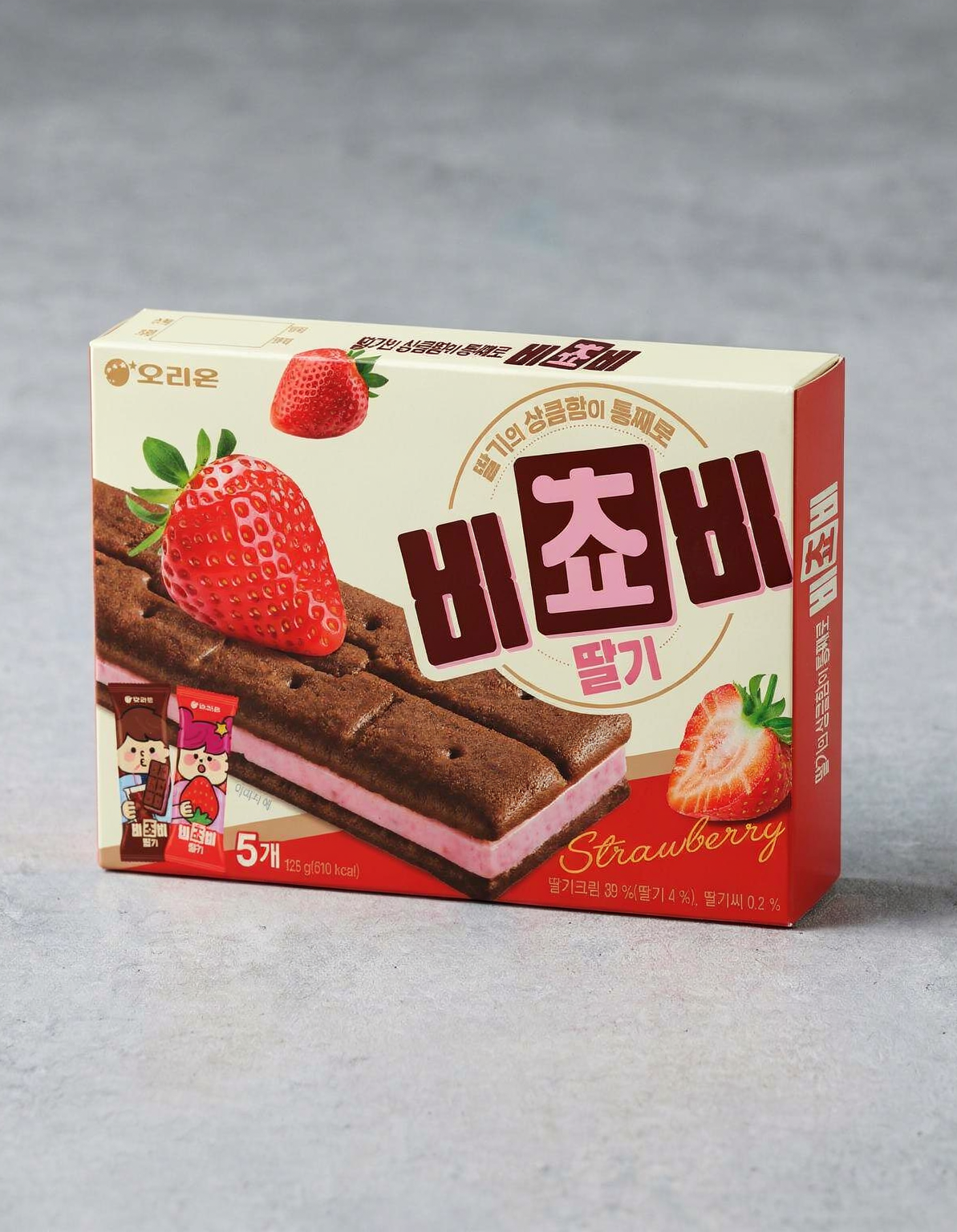
Orion Bichobi Strawberry pack with cocoa biscuits and pink strawberry filling
Bichobi Strawberry. The biscuits are cocoa, not wheat, and the filling is pink — that is how you tell it apart on the shelf. Photo: Meokbogo product archive.

It is built differently from the original. Instead of milk chocolate between wheat biscuits, it puts a strawberry chocolate slab between cocoa biscuits, and the slab carries real strawberry seeds. The seeds are not decoration; they pop slightly against the cocoa, which is what people describe when they say it tastes closer to fruit than to candy.

It was popular enough that Orion made it permanent in April 2026 after repeated requests, and raised the cocoa content to 1.4 times the original level so the chocolate would hold its own against the fruit. So the strawberry version you find now is not the same recipe as the 2025 limited run — it is a darker one.

A third flavour, matcha chocolat, also exists on Korean shelves.

If you want to see how the strawberry version compares with every other strawberry snack on a Korean shelf, we put 95 of them side by side with the numbers from their labels.

What is actually inside

All figures below are per 100 g, taken from each product's nutrition label as filed with Korea's Ministry of Food and Drug Safety (MFDS). Per-100 g is the only way to compare these fairly.

ProductCaloriesSodiumSugarProteinFatCarbs
Bichobi 비쵸비504 kcal220 mg40 g8 g24 g64 g
Bichobi Strawberry 비쵸비 딸기504 kcal280 mg36 g4 g24 g68 g
Bichobi Matcha Chocolat 비쵸비 말차쇼콜라맛524 kcal380 mg37 g6 g26 g66 g

Two things stand out. The strawberry version is not the sweeter one — it carries less sugar than the original and more carbohydrate, which fits a fruit-flavoured chocolate over a cocoa biscuit. And the matcha version is the heaviest of the three on calories, sodium and fat.

Ingredient notes on the original label include wheat, milk chocolate, butter oil, fermented milk and peanut or tree-nut processed products. If you avoid nuts, that last one matters: the hazelnut is not a garnish, it is in the chocolate. Anything not written on a label is simply not recorded, and a label does not rule out shared production lines.

If you are buying it as a gift

A box holds five individually wrapped pieces, each wrapper printed with a different character, which is most of the reason it reads as a souvenir rather than as a snack. The wrappers are the gift; the biscuit is what happens afterwards.

What is stocked changes by store and by season, and the strawberry version moves faster than the original in visitor districts. If you see it, that is the moment.

Nutrition figures come from product labels as filed with Korea's Ministry of Food and Drug Safety (MFDS). Company figures and launch dates from Orion announcements as reported by Businesskorea (5 September 2024), Hankyung (13 April 2026), Asia Economy (10 September 2026) and Financial News (6 November 2025, museum edition and US entry). Product photography: Meokbogo archive and Orion (orionworld.com).

More from Korean Snack Guide

Monday, September 14, 2026

Korean matcha snacks: why the trend goes beyond lattes

MEOKBOGO ORIGINAL · FOOD CULTURE

Looking for matcha in Korea? Start in the snack aisle. The green-tea boom is turning up in brownies, wafers and rice cakes—not just lattes.

A selection of matcha-flavored Korean snacks from Lotte Wellfood
Matcha-flavored Korean snacks. Photo supplied by Lotte Wellfood, via Meokbogo.

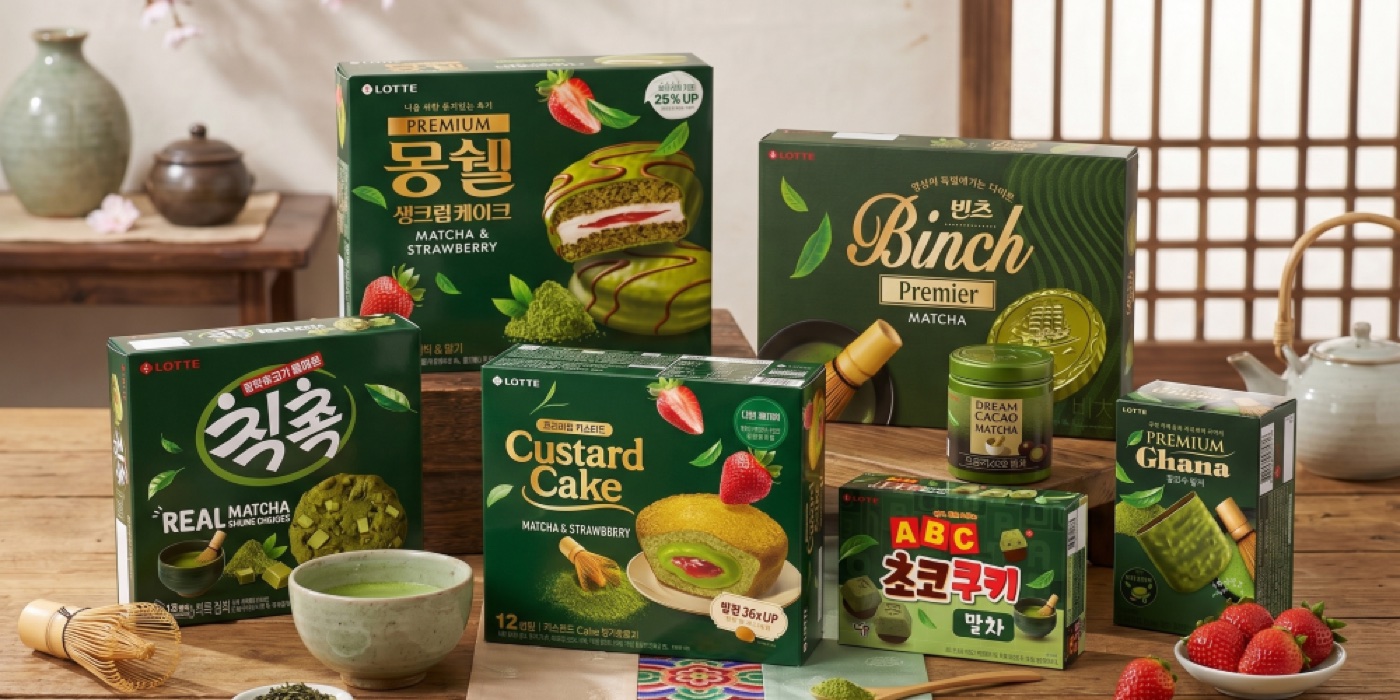
Korean convenience-store shelves are getting greener. Matcha now appears in brownies, wafers, chocolate, langue de chat cookies and even protein bars. In a September 11, 2026 snapshot of the Meokbogo product catalog, 39 Korean products had matcha in their names. Thirty were snacks, baked goods or rice cakes. Only three were drinks.

For a visitor following the matcha trend, that changes where to look. The powder that much of the world is stirring into a cup is also finding its way into Korea's snack aisle.

Neoguri Ramen: Mild and Spicy Seafood, Cup and Bowl Compared

This page covers five Neoguri versions from Nongshim. Four are soup-style: Nongshim Mild Neoguri, Nongshim Mild Neoguri Cup, Nongshim Ne...