Samyang Samyang Ramyun is the heavier and slightly saltier of the two per 100 g. It has 429 kcal and 1517 mg of sodium, against 417 kcal and 1492 mg for Nongshim Shin Ramyun. Sugar, protein and fat are identical at 3.33 g, 8.33 g and 13.33 g per 100 g. Carbs are 69.16 g for Samyang and 65.83 g for Shin Ramyun.
The listed ingredients and flavors differ more than the numbers do. Shin Ramyun is described as spicy and beef-flavored, and its list adds a fruit and vegetable product to the noodles and seasoning blend. Samyang Samyang Ramyun lists only noodles and a seasoning blend, and carries a hearty taste tag with no spicy tag.
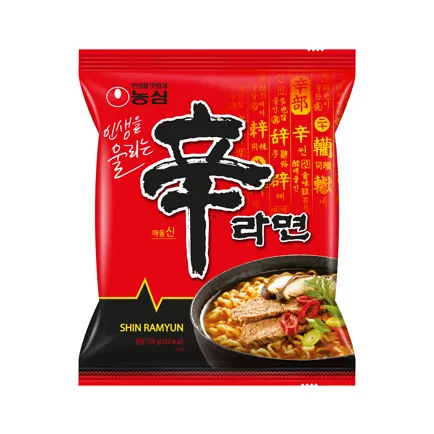
The main differences
On energy, Samyang Samyang Ramyun comes to 429 kcal per 100 g and Nongshim Shin Ramyun to 417 kcal. The sodium gap is small: 1517 mg against 1492 mg per 100 g. Both are high-sodium noodles by any reading, so neither is the light choice. The extra weight for Samyang shows up mainly in carbs, 69.16 g against 65.83 g per 100 g.
The ingredient lists set them apart. Shin Ramyun lists noodles, a seasoning blend and a processed fruit and vegetable product. Samyang lists noodles and a seasoning blend only. For taste, Shin Ramyun is tagged spicy and hearty. Samyang is tagged hearty and also carries a retro theme tag.
Who might prefer which
If you want a spicy, beef-flavored soup, Shin Ramyun is the one whose flavor description and taste tags point that way. It also has slightly lower energy, sodium and carbs per 100 g.
If you like a plainer, hearty bowl with a shorter ingredient list, Samyang Samyang Ramyun fits better. Its tags give hearty and retro, with no spicy tag. Expect a bit more energy and carbs per 100 g.
What to check on the label
Read the ingredient list first. The two products differ there, and the seasoning blend is listed without further detail. If you avoid a particular ingredient, check the pack in your hands.
Both sets of numbers here are for the Korean-market versions. Packs sold outside Korea can differ, so compare the label on your own pack before you rely on any figure.
The lineup
- Nongshim Shin Ramyun 신라면 — The spicy, beef-flavored one, with a fruit and vegetable product added to its ingredient list. It is a little lower than Samyang in energy, sodium and carbs per 100 g.
- Samyang Samyang Ramyun 삼양라면 — The shorter ingredient list, with noodles and a seasoning blend only, and a hearty tag with a retro theme. It is the heavier and slightly saltier of the two per 100 g.
Nutrition and label flags, per 100 g
Every figure in the table comes from the product's own nutrition label as filed with Korea's Ministry of Food and Drug Safety (MFDS), per 100 g so packs of different sizes compare directly. An ingredient flag means that ingredient is written on the label. An empty flag means nothing of that kind is listed. It is not a certification and does not rule out shared production lines. These are the Korean-market versions; packs sold outside Korea can differ.
| Product | kcal /100g | Sodium mg | Sugar g | Protein g | Ingredient flags | Allergens listed |
|---|---|---|---|---|---|---|
| Nongshim Shin Ramyun 신라면 |
417 | 1492 | 3.33 | 8.33 | none listed | — |
| Samyang Samyang Ramyun 삼양라면 |
429 | 1517 | 3.33 | 8.33 | none listed | — |
Source: product labels filed with the Korea Ministry of Food and Drug Safety (MFDS). Values per 100 g.


No comments:
Post a Comment