This page ranks 22 well-known Korean ramen by kcal per 100 g, from the most to the least. Paldo Lunch Box sits at the top with 453 kcal per 100 g. Samyang Buldak Bokkeummyeon is at the bottom with 379 kcal per 100 g.
All figures are per 100 g for the Korean-market versions. Packs sold outside Korea can differ, so use these numbers to compare products, not as a promise about the pack in your hand.



The top of the list
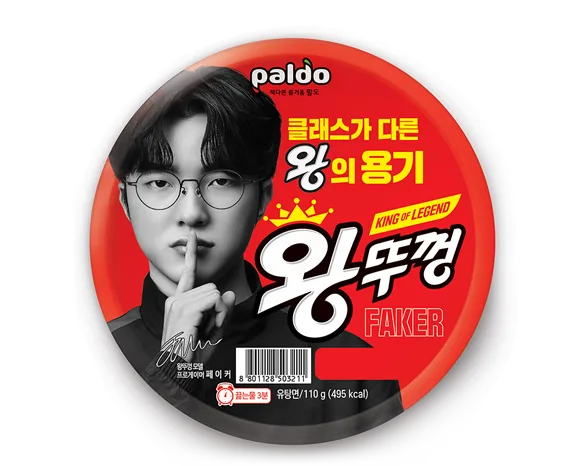
Paldo Lunch Box leads at 453 kcal per 100 g. Ottogi Sesame Ramyun and Paldo King Ttukkeong follow at 450 kcal per 100 g each. Nongshim Sari Gomtang Noodle comes next at 445 kcal, then Ottogi Snack Noodle at 440 kcal. All five are soup-style ramen, and all five carry the hearty taste tag.
Sodium per 100 g varies even among these five. Lunch Box shows 1605 mg and King Ttukkeong shows 1536 mg. Sari Gomtang Noodle shows 1545 mg and Snack Noodle shows 1583 mg. The highest sodium on the whole page belongs to Nongshim Yukgaejang Bowl Noodle, at 1849 mg per 100 g. Its kcal sits mid-table at 436.
The lighter end
The four lowest are Samyang Buldak Bokkeummyeon at 379 kcal, Ottogi Jin Jjamppong at 385 kcal, Nongshim Chapagetti Double Black at 401 kcal and Paldo Bibim Myun at 404 kcal, all per 100 g. Three of the four are stir-fried or mixed-style noodles rather than soup. Next up is a group of three at 417 kcal per 100 g: Ottogi Jin Ramen Mild Flavor, Ottogi Jin Ramen Spicy Flavor and Nongshim Shin Ramyun.
Lower kcal does not always mean lower sodium or sugar. Bibim Myun has the lowest sodium after Sichuan Chapagetti, at 838 mg per 100 g, but the highest sugar on the page, at 9.23 g per 100 g. Jin Jjamppong is light in kcal but shows 1369 mg of sodium per 100 g.
How to read the label
Every number here is per 100 g, not per pack. Check the weight of your own pack before comparing it with another. Seasoning packets, sauce packets and cup or bowl formats all change what you actually eat.
Several products here list wheat in the allergen line, so read the allergen line on your own pack. The list above is based on the Korean-market versions, and packs sold outside Korea can differ.
The lineup
- Paldo Lunch Box 도시락 — The highest kcal on the list at 453 kcal per 100 g, and also the lowest sugar at 2.33 g per 100 g. Its taste tags are hearty and salty.
- Ottogi Sesame Ramyun 참깨라면 — A nutty, hearty soup-style ramen at 450 kcal per 100 g. Its ingredients include a flavored oil and an egg-containing processed product.
- Paldo King Ttukkeong 왕뚜껑 — Ties Sesame Ramyun at 450 kcal per 100 g, with sodium of 1536 mg per 100 g. It lists a garnish soup and a powder soup alongside the noodles.
- Nongshim Sari Gomtang Noodle 사리곰탕면 — The highest protein on the list at 10.91 g per 100 g, with 445 kcal. Its only taste tag is hearty.
- Ottogi Snack Noodle 스낵면 — A short ingredient list of noodles and a compound seasoning. Sodium is 1583 mg per 100 g, at 440 kcal.
- Nongshim Sichuan Chapagetti 사천짜파게티 — The black bean sauce stir-fried style, with the lowest sodium on the list at 788 mg per 100 g despite 438 kcal. Wheat is listed as an allergen.
- Ottogi Kimchi Ramyun 김치라면 — Shares 438 kcal per 100 g with Sichuan Chapagetti, but this one is a spicy soup-style ramen with 1442 mg of sodium per 100 g.
- Nongshim Yukgaejang Bowl Noodle 육개장사발면 — The bowl-format ramen with the highest sodium here, 1849 mg per 100 g, at 436 kcal. Wheat is listed as an allergen.
- Nongshim Shin Ramyun Gold 신라면 골드 — The spicy beef-flavored Shin Ramyun in its Gold version, at 432 kcal per 100 g and 1432 mg of sodium. Wheat is listed as an allergen.
- Nongshim Shin Ramyun Black 신라면 블랙 — The Black version of Shin Ramyun has lower sodium than Gold, at 1328 mg per 100 g, and higher sugar at 5.97 g per 100 g. Kcal is 429.
- Ottogi Yeol Ramyun 열라면 — A spicy, hearty soup-style ramen at 429 kcal per 100 g. Its listed ingredients include a fruit and vegetable processed product.
- Samyang Samyang Ramyun 삼양라면 — A hearty soup-style ramen with a very short ingredient list of noodles and a compound seasoning. Kcal is 429 per 100 g.
- Nongshim Squid Jjamppong 오징어짬뽕 — A spicy and salty jjamppong-style soup at 423 kcal per 100 g. Sugar is 6.45 g per 100 g, among the higher figures here, and wheat is listed as an allergen.
- Nongshim Mild Neoguri 순한 너구리 — Tagged plain-tasting rather than spicy, with the lowest sodium of any soup-style ramen here at 1233 mg per 100 g. Kcal is 421.
- Nongshim Ansungtangmyun 안성탕면 — The second-lowest sugar on the list at 2.4 g per 100 g, at 420 kcal. Rice flour appears in its ingredient list, and wheat is listed as an allergen.
- Ottogi Jin Ramen Mild Flavor 진라면 순한맛 — The mild version of Jin Ramen, with 10 g of protein per 100 g and 417 kcal. Its taste tags are mild and hearty.
- Ottogi Jin Ramen Spicy Flavor 진라면 매운맛 — The spicy version of Jin Ramen, with the same three listed ingredients as the mild one. Sodium is 1550 mg per 100 g, at 417 kcal.
- Nongshim Shin Ramyun 신라면 — The original spicy beef-flavored Shin Ramyun at 417 kcal per 100 g, with sodium of 1492 mg. It lists the same three ingredients as the Jin Ramen pair.
- Paldo Bibim Myun 팔도비빔면 — A cold spicy mixed noodle with only a sauce and noodles listed. It has the highest sugar here at 9.23 g per 100 g and low sodium at 838 mg, at 404 kcal.
- Nongshim Chapagetti Double Black 짜파게티더블랙 — A black bean sauce noodle with the lowest fat on the list at 9.48 g per 100 g and the highest carbs at 71.55 g. Kcal is 401, and sodium is 966 mg.
- Ottogi Jin Jjamppong 진짬뽕 — The second-lightest in kcal at 385 per 100 g, though sodium is still 1369 mg. A spicy jjamppong soup with a sauce and a flavored oil listed.
- Samyang Buldak Bokkeummyeon 불닭볶음면 — The lightest on the list at 379 kcal per 100 g, with 914 mg of sodium. A hot chicken flavor stir-fried ramen tagged spicy and addictive.
Nutrition and label flags, per 100 g
Every figure in the table comes from the product's own nutrition label as filed with Korea's Ministry of Food and Drug Safety (MFDS), per 100 g so packs of different sizes compare directly. An ingredient flag means that ingredient is written on the label. An empty flag means nothing of that kind is listed. It is not a certification and does not rule out shared production lines. These are the Korean-market versions; packs sold outside Korea can differ.
| Product | kcal /100g | Sodium mg | Sugar g | Protein g | Ingredient flags | Allergens listed |
|---|---|---|---|---|---|---|
| Paldo Lunch Box 도시락 |
453 | 1605 | 2.33 | 8.14 | none listed | — |
| Ottogi Sesame Ramyun 참깨라면 |
450 | 1445 | 3.64 | 8.18 | none listed | — |
| Paldo King Ttukkeong 왕뚜껑 |
450 | 1536 | 3.64 | 8.18 | none listed | — |
| Nongshim Sari Gomtang Noodle 사리곰탕면 |
445 | 1545 | 2.73 | 10.91 | none listed | — |
| Ottogi Snack Noodle 스낵면 |
440 | 1583 | 3.7 | 9.26 | none listed | — |
| Nongshim Sichuan Chapagetti 사천짜파게티 |
438 | 788 | 5.84 | 8.03 | none listed | wheat |
| Ottogi Kimchi Ramyun 김치라면 |
438 | 1442 | 4.17 | 8.33 | none listed | — |
| Nongshim Yukgaejang Bowl Noodle 육개장사발면 |
436 | 1849 | 4.65 | 8.14 | none listed | wheat |
| Nongshim Shin Ramyun Gold 신라면 골드 |
432 | 1432 | 4 | 8 | none listed | wheat |
| Nongshim Shin Ramyun Black 신라면 블랙 |
429 | 1328 | 5.97 | 8.96 | none listed | wheat |
| Ottogi Yeol Ramyun 열라면 |
429 | 1525 | 4.17 | 9.17 | none listed | — |
| Samyang Samyang Ramyun 삼양라면 |
429 | 1517 | 3.33 | 8.33 | none listed | — |
| Nongshim Squid Jjamppong 오징어짬뽕 |
423 | 1411 | 6.45 | 8.07 | none listed | wheat |
| Nongshim Mild Neoguri 순한 너구리 |
421 | 1233 | 5 | 7.5 | none listed | wheat |
| Nongshim Ansungtangmyun 안성탕면 |
420 | 1432 | 2.4 | 8.8 | none listed | wheat |
| Ottogi Jin Ramen Mild Flavor 진라면 순한맛 |
417 | 1567 | 3.33 | 10 | none listed | — |
| Ottogi Jin Ramen Spicy Flavor 진라면 매운맛 |
417 | 1550 | 3.83 | 9.17 | none listed | — |
| Nongshim Shin Ramyun 신라면 |
417 | 1492 | 3.33 | 8.33 | none listed | — |
| Paldo Bibim Myun 팔도비빔면 |
404 | 838 | 9.23 | 6.92 | none listed | — |
| Nongshim Chapagetti Double Black 짜파게티더블랙 |
401 | 966 | 6.9 | 7.76 | none listed | — |
| Ottogi Jin Jjamppong 진짬뽕 |
385 | 1369 | 5.38 | 7.69 | none listed | — |
| Samyang Buldak Bokkeummyeon 불닭볶음면 |
379 | 914 | 5 | 8.57 | none listed | — |
Source: product labels filed with the Korea Ministry of Food and Drug Safety (MFDS). Values per 100 g.


No comments:
Post a Comment