Wednesday, October 21, 2026

All Pepero Flavors in Korea: Calories and Ingredients Compared

This page covers 12 Lotte Wellfood Pepero versions, all described as chocolate-dipped biscuit sticks. They fall into four loose groups: classic chocolate styles, nut and cookie styles, fruit styles, and a small group of cream cheese and matcha. Per 100 g, energy runs from 500 kcal (Choco Cookie, Pepero, Pepero Slim and Strawberry & Milk) up to 554 kcal (Almond).

The gap between flavors is small on calories and larger on sodium and sugar. Per 100 g, sodium goes from 230 mg to 533 mg, and sugar from 27.78 g to 40 g. These are the Korean-market versions, so packs sold outside Korea can differ.
Lotte Wellfood Almond Pepero
Lotte Wellfood Choco Cookie Pepero
Lotte Wellfood Choco Field Pepero
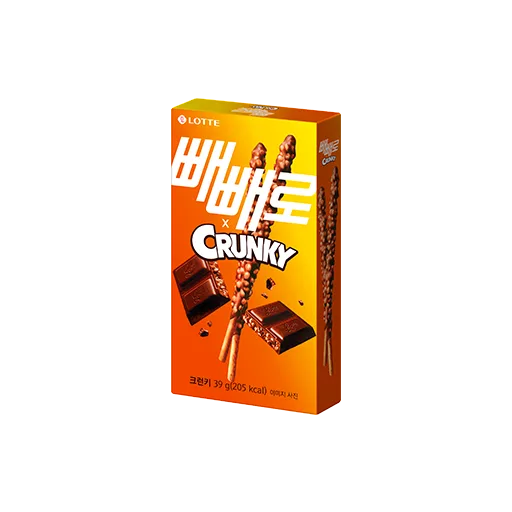
Lotte Wellfood Crunky Pepero

How the flavors group

The classic chocolate group is Pepero, Pepero Slim, Choco Field and Crunky. These are tagged sweet, and Slim also carries the nutty tag. The nut and cookie group is Almond, Choco Cookie and White Cookie. All three are tagged sweet and nutty, and their listed ingredients include almonds, cookie chips, or almond and peanut powder.

The fruit group is Strawberry, Strawberry & Milk and Pepero Double Lychee Salty Vanilla. The last one is the only version tagged both sweet and salty. Nude Cream Cheese and Matcha make up the rest. Both are tagged sweet and nutty, and both list cocoa-related ingredients.

Lighter and heavier per 100 g

On energy, Almond is highest at 554 kcal per 100 g, followed by Double Lychee Salty Vanilla at 550 kcal. Strawberry is next at 527 kcal. Four versions sit at the low end at 500 kcal per 100 g, and Choco Field, Matcha and Nude Cream Cheese fall in between.

Sodium varies more. Pepero Slim is highest at 533 mg per 100 g, then Pepero at 463 mg. Strawberry is lowest at 230 mg, and Double Lychee Salty Vanilla is next at 275 mg despite its salty name. For sugar, Double Lychee Salty Vanilla is highest at 40 g per 100 g and Nude Cream Cheese follows at 39.13 g. Pepero is lowest at 27.78 g.

What to check on the label

Allergens differ between flavors. White Cookie lists milk, wheat, soy, peanut and tree nut. Almond lists milk, wheat and tree nut. Choco Field and Nude Cream Cheese list wheat and soy. The rest list milk and wheat. Check the pack in your hands, because export versions can differ from the Korean ones described here.

The lineup

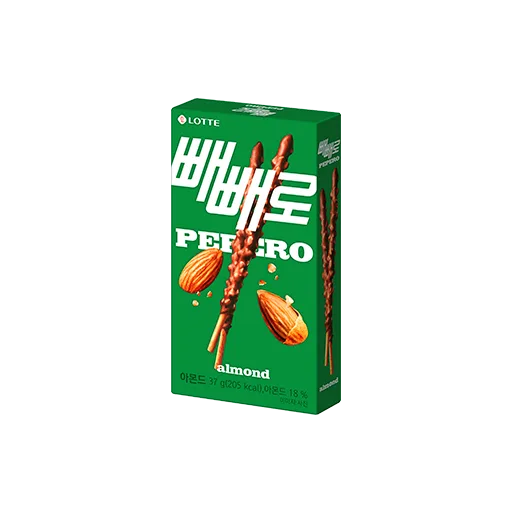
  • Lotte Wellfood Almond Pepero 아몬드 빼빼로 — The highest in energy and fat of the group, at 554 kcal and 32.43 g fat per 100 g. Almonds are listed among the ingredients, and tree nut is listed as an allergen.
  • Lotte Wellfood Choco Cookie Pepero 초코쿠키 빼빼로 — The cookie version with cookie chips in its ingredient list. It sits at 500 kcal per 100 g, with 29.73 g sugar, among the lower sugar figures here.
  • Lotte Wellfood Choco Field Pepero 초코필드빼빼로 — Lists corn starch and soybean oil, and has the lowest protein of the group at 6.67 g per 100 g. Its allergens are wheat and soy, with no milk listed.
  • Lotte Wellfood Crunky Pepero 크런키 빼빼로 — The Crunky version, with a processed grain ingredient in its list. It has 526 kcal and 33.33 g sugar per 100 g.
  • Lotte Wellfood Matcha Pepero 말차 빼빼로 — The matcha flavor, tagged sweet and nutty. Cocoa powder appears in its ingredients, and it has 514 kcal and 378 mg sodium per 100 g.
  • Lotte Wellfood Nude Cream Cheese Pepero 누드 크림치즈 빼빼로 — The cream cheese flavor, with the second-highest sugar here at 39.13 g per 100 g. Its allergens are wheat and soy, and its sodium is 413 mg.
  • Lotte Wellfood Pepero 빼빼로 — The plain original, with the lowest sugar of the group at 27.78 g per 100 g. Its sodium is the second highest at 463 mg.
  • Lotte Wellfood Pepero Double Lychee Salty Vanilla 빼빼로 더블리치 솔티바닐라 — The only sweet-and-salty version. It has the highest sugar at 40 g per 100 g, yet one of the lowest sodium figures at 275 mg.
  • Lotte Wellfood Pepero Slim 빼빼로 슬림 — The slim style, with the highest sodium at 533 mg per 100 g. It also has the lowest fat at 20 g and the highest carbs at 68.89 g, and lactose and cocoa mass are listed.
  • Lotte Wellfood Strawberry Pepero 딸기 빼빼로 — The plain strawberry flavor, with the lowest sodium of the group at 230 mg per 100 g. It has 35.14 g sugar and 527 kcal.
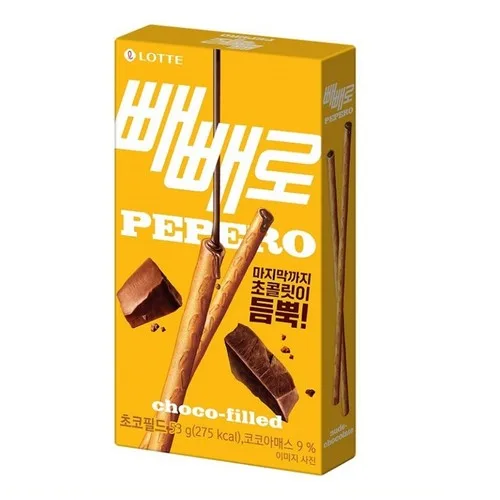
  • Lotte Wellfood White Cookie Pepero 화이트쿠키 빼빼로 — The white cookie version. Almond powder and peanut powder are listed, and it carries the longest allergen list here, including peanut.
  • Lotte Wellfood Strawberry & Milk Pepero 스트로베리&밀크 빼빼로 — Strawberry with a milk note, at 500 kcal and 32.43 g sugar per 100 g. It has lower sugar than the plain Strawberry flavor and a higher sodium figure of 351 mg.

Nutrition and label flags, per 100 g

Every figure in the table comes from the product's own nutrition label as filed with Korea's Ministry of Food and Drug Safety (MFDS), per 100 g so packs of different sizes compare directly. An ingredient flag means that ingredient is written on the label. An empty flag means nothing of that kind is listed. It is not a certification and does not rule out shared production lines. These are the Korean-market versions; packs sold outside Korea can differ.
Productkcal
/100g
Sodium
mg
Sugar
g
Protein
g
Ingredient flagsAllergens listed
Lotte Wellfood Almond Pepero
아몬드 빼빼로
55432429.73 10.81 none listed milk, wheat, tree_nut
Lotte Wellfood Choco Cookie Pepero
초코쿠키 빼빼로
50035129.73 10.81 none listed milk, wheat
Lotte Wellfood Choco Field Pepero
초코필드빼빼로
51142233.33 6.67 none listed wheat, soy
Lotte Wellfood Crunky Pepero
크런키 빼빼로
52633333.33 7.69 none listed milk, wheat
Lotte Wellfood Matcha Pepero
말차 빼빼로
51437832.43 8.11 none listed milk, wheat
Lotte Wellfood Nude Cream Cheese Pepero
누드 크림치즈 빼빼로
52241339.13 6.74 none listed wheat, soy
Lotte Wellfood Pepero
빼빼로
50046327.78 9.26 none listed milk, wheat
Lotte Wellfood Pepero Double Lychee Salty Vanilla
빼빼로 더블리치 솔티바닐라
55027540 7 none listed milk, wheat
Lotte Wellfood Pepero Slim
빼빼로 슬림
50053331.11 11.11 none listed milk, wheat
Lotte Wellfood Strawberry Pepero
딸기 빼빼로
52723035.14 8.11 none listed milk, wheat
Lotte Wellfood White Cookie Pepero
화이트쿠키 빼빼로
50337837.84 8.11 none listed milk, wheat, soy, peanut, tree_nut
Lotte Wellfood Strawberry & Milk Pepero
스트로베리&밀크 빼빼로
50035132.43 6.76 none listed milk, wheat

Source: product labels filed with the Korea Ministry of Food and Drug Safety (MFDS). Values per 100 g.

More from Korean Snack Guide

Tuesday, October 20, 2026

Popular Korean Ramen Ranked by Sodium (Per 100 g)

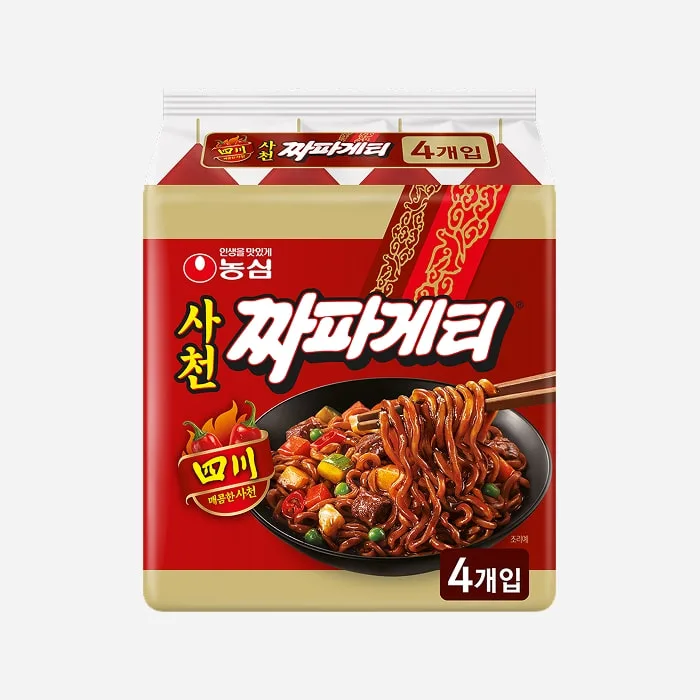
This list covers 22 well-known Korean ramen, ranked by sodium per 100 g. Nongshim Yukgaejang Bowl Noodle is at the top with 1849 mg per 100 g. Nongshim Sichuan Chapagetti is at the bottom with 788 mg per 100 g.

Most of the soup ramen sit close together in the upper part of the list, between 1411 mg and 1849 mg per 100 g. The lower part is mostly sauce, stir-fried and mixed noodles. Use the ranking to see which names sit near the top, which sit lower, and what else differs between them.

Nongshim Yukgaejang Bowl Noodle
Paldo Lunch Box
Paldo Lunch Box
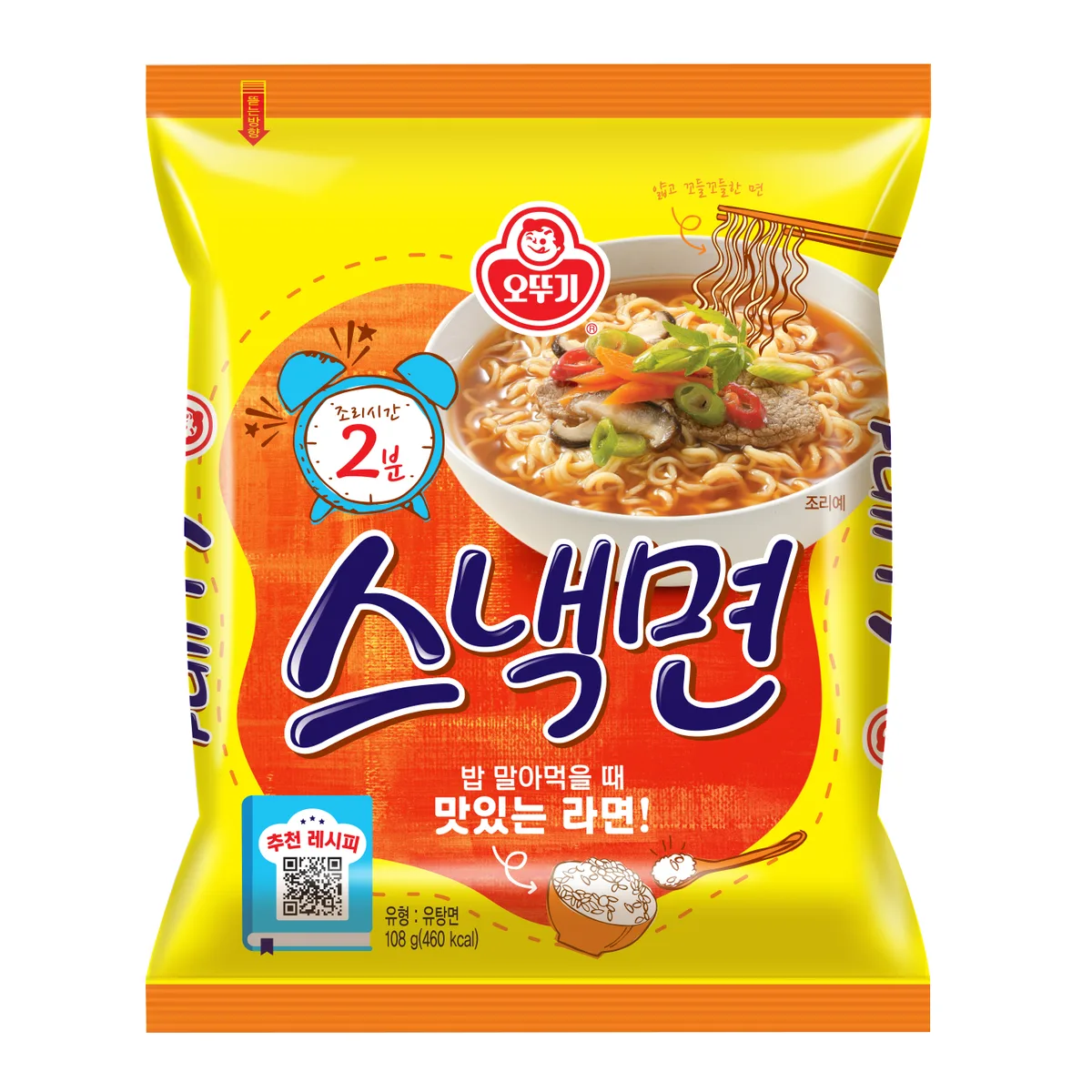
Ottogi Snack Noodle
Ottogi Snack Noodle
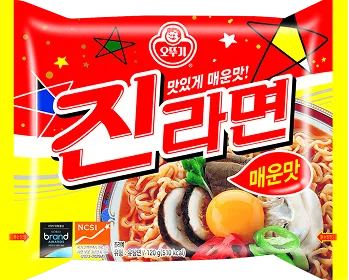
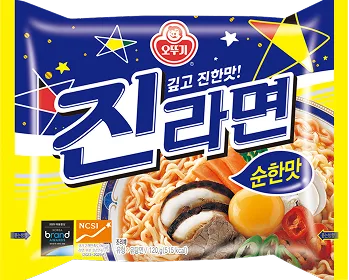
Ottogi Jin Ramen Mild Flavor

The top of the list

Yukgaejang Bowl Noodle leads at 1849 mg per 100 g. Paldo Lunch Box follows at 1605 mg, then Ottogi Snack Noodle at 1583 mg. Ottogi Jin Ramen Mild Flavor (1567 mg) and Spicy Flavor (1550 mg) come next, and the mild one is slightly higher. Nongshim Sari Gomtang Noodle (1545 mg) and Paldo King Ttukkeong (1536 mg) are close behind.

The famous red-pack names sit in the middle of the upper group. Nongshim Shin Ramyun is at 1492 mg per 100 g. Shin Ramyun Gold is at 1432 mg and Shin Ramyun Black is at 1328 mg, so the two upgraded versions are both lower on this measure. Samyang Samyang Ramyun is at 1517 mg per 100 g.

The lighter end

Nongshim Mild Neoguri is the lowest soup ramen on this list at 1233 mg per 100 g. Its taste tag is light and clean. Below it, the list changes to sauce noodles. Nongshim Chapagetti Double Black is at 966 mg per 100 g, Samyang Buldak Bokkeummyeon is at 914 mg, Paldo Bibim Myun is at 838 mg and Nongshim Sichuan Chapagetti is at 788 mg.

Sodium is only one number. Paldo Bibim Myun has the highest sugar on the list at 9.23 g per 100 g, and its taste tags include sweet. A lower sodium figure does not mean a milder or lighter bowl overall.

How to read the label

Every number here is per 100 g, not per pack or per bowl. Compare the same base when you look at a pack in your hands. These are the Korean-market versions, and packs sold outside Korea can differ.
Wheat is listed on the label for some of these, including Yukgaejang Bowl Noodle, Shin Ramyun Gold, Shin Ramyun Black, Ansungtangmyun, Squid Jjamppong, Mild Neoguri and Sichuan Chapagetti. Check the ingredient and allergen lines on your own pack, especially if you avoid a particular ingredient.

The lineup

  • Nongshim Yukgaejang Bowl Noodle 육개장사발면 — The highest sodium on the list at 1849 mg per 100 g. Its listed ingredients include fish cake and dried green onion, and wheat is listed.
  • Paldo Lunch Box 도시락 — The second-highest at 1605 mg per 100 g, with a very short ingredient list of noodles, seasoning and one processed item. Tagged hearty and salty.
  • Ottogi Snack Noodle 스낵면 — A plain pairing of fried noodles and seasoning in the listed ingredients. Tagged hearty, at 1583 mg per 100 g.
  • Ottogi Jin Ramen Mild Flavor 진라면 순한맛 — The mild Jin Ramen, tagged light and hearty. It is slightly higher in sodium than its spicy sibling, at 1567 mg per 100 g.
  • Ottogi Jin Ramen Spicy Flavor 진라면 매운맛 — The spicy Jin Ramen at 1550 mg per 100 g. It has the same three listed ingredients as the mild one.
  • Nongshim Sari Gomtang Noodle 사리곰탕면 — Listed as noodles, a garnish packet and a powder soup. It has 1545 mg of sodium per 100 g and a hearty tag.
  • Paldo King Ttukkeong 왕뚜껑 — A larger-bowl name with salty and hearty tags. It lists fried noodles, a garnish soup and a powder soup, at 1536 mg per 100 g.
  • Ottogi Yeol Ramyun 열라면 — A spicy-tagged Ottogi ramen at 1525 mg per 100 g. Its listed ingredients start with the seasoning.
  • Samyang Samyang Ramyun 삼양라면 — A short ingredient list of fried noodles and seasoning, tagged as a retro-style classic. It has 1517 mg of sodium per 100 g.
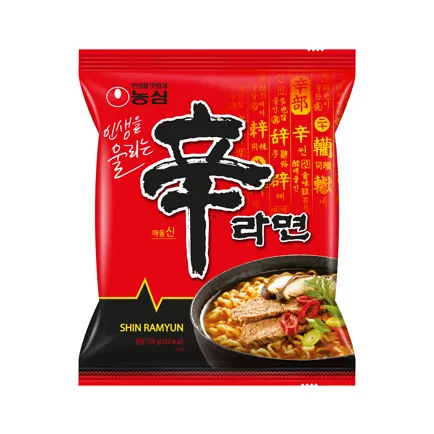
  • Nongshim Shin Ramyun 신라면 — Glossed as spicy beef-flavored instant ramen, at 1492 mg per 100 g. It is the standard version of the Shin Ramyun line here.
  • Ottogi Sesame Ramyun 참깨라면 — The nutty one, tagged for its sesame-style flavor. Its listed ingredients include a flavored oil and an egg-containing processed item, at 1445 mg per 100 g.
  • Ottogi Kimchi Ramyun 김치라면 — The kimchi version, tagged spicy and hearty. It lists only seasoning and fried noodles, at 1442 mg per 100 g.
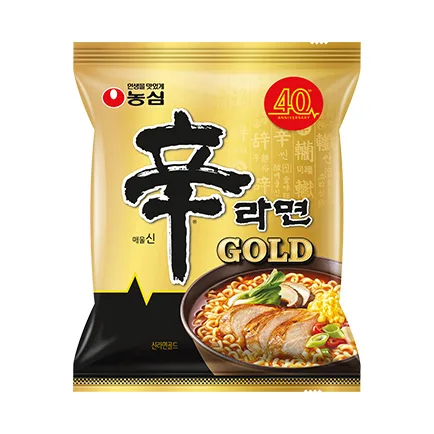
  • Nongshim Shin Ramyun Gold 신라면 골드 — The Gold version of Shin Ramyun, at 1432 mg per 100 g. It has a long ingredient list that includes flavored oil, and wheat is listed.
  • Nongshim Ansungtangmyun 안성탕면 — Tied with Shin Ramyun Gold at 1432 mg per 100 g. Rice flour is among its listed ingredients, and it is tagged hearty only.
  • Nongshim Squid Jjamppong 오징어짬뽕 — A squid jjamppong flavor, tagged spicy and salty. It has 6.45 g of sugar per 100 g.
  • Ottogi Jin Jjamppong 진짬뽕 — A jjamppong-style ramen at 1369 mg per 100 g. Its listed ingredients include sauce, flavored oil and fried noodles, and it has only a spicy tag.
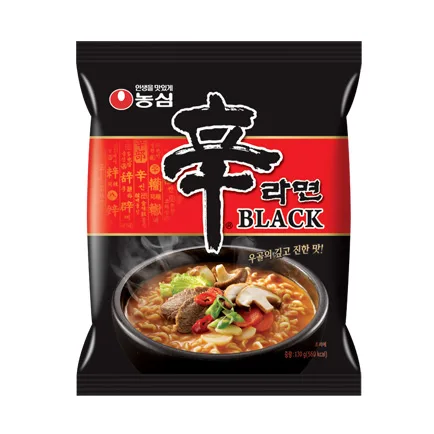
  • Nongshim Shin Ramyun Black 신라면 블랙 — The Black version of Shin Ramyun, lower in sodium than the standard at 1328 mg per 100 g. It has 5.97 g of sugar per 100 g, and wheat is listed.
  • Nongshim Mild Neoguri 순한 너구리 — The mildest soup ramen here, tagged light and clean. It has 1233 mg of sodium per 100 g, and its listed ingredients include a seafood processed item.
  • Nongshim Chapagetti Double Black 짜파게티더블랙 — Glossed as black bean sauce instant noodles. It is the first sauce noodle on the list, at 966 mg per 100 g, tagged salty and nutty.
  • Samyang Buldak Bokkeummyeon 불닭볶음면 — Glossed as Korean hot chicken flavor stir-fried ramen. It is tagged spicy and habit-forming, at 914 mg per 100 g.
  • Paldo Bibim Myun 팔도비빔면 — Glossed as cold spicy mixed noodles. Its ingredient list is just sauce and noodles, with the highest sugar on the list at 9.23 g per 100 g and a sweet tag.
  • Nongshim Sichuan Chapagetti 사천짜파게티 — The lowest sodium on the list at 788 mg per 100 g. It is glossed as black bean sauce instant noodles, and wheat is listed.

Nutrition and label flags, per 100 g

Every figure in the table comes from the product's own nutrition label as filed with Korea's Ministry of Food and Drug Safety (MFDS), per 100 g so packs of different sizes compare directly. An ingredient flag means that ingredient is written on the label. An empty flag means nothing of that kind is listed. It is not a certification and does not rule out shared production lines. These are the Korean-market versions; packs sold outside Korea can differ.

Productkcal
/100g
Sodium
mg
Sugar
g
Protein
g
Ingredient flagsAllergens listed
Nongshim Yukgaejang Bowl Noodle
육개장사발면
43618494.65 8.14 none listed wheat
Paldo Lunch Box
도시락
45316052.33 8.14 none listed —
Ottogi Snack Noodle
스낵면
44015833.7 9.26 none listed —
Ottogi Jin Ramen Mild Flavor
진라면 순한맛
41715673.33 10 none listed —
Ottogi Jin Ramen Spicy Flavor
진라면 매운맛
41715503.83 9.17 none listed —
Nongshim Sari Gomtang Noodle
사리곰탕면
44515452.73 10.91 none listed —
Paldo King Ttukkeong
왕뚜껑
45015363.64 8.18 none listed —
Ottogi Yeol Ramyun
열라면
42915254.17 9.17 none listed —
Samyang Samyang Ramyun
삼양라면
42915173.33 8.33 none listed —
Nongshim Shin Ramyun
신라면
41714923.33 8.33 none listed —
Ottogi Sesame Ramyun
참깨라면
45014453.64 8.18 none listed —
Ottogi Kimchi Ramyun
김치라면
43814424.17 8.33 none listed —
Nongshim Shin Ramyun Gold
신라면 골드
43214324 8 none listed wheat
Nongshim Ansungtangmyun
안성탕면
42014322.4 8.8 none listed wheat
Nongshim Squid Jjamppong
오징어짬뽕
42314116.45 8.07 none listed wheat
Ottogi Jin Jjamppong
진짬뽕
38513695.38 7.69 none listed —
Nongshim Shin Ramyun Black
신라면 블랙
42913285.97 8.96 none listed wheat
Nongshim Mild Neoguri
순한 너구리
42112335 7.5 none listed wheat
Nongshim Chapagetti Double Black
짜파게티더블랙
4019666.9 7.76 none listed —
Samyang Buldak Bokkeummyeon
불닭볶음면
3799145 8.57 none listed —
Paldo Bibim Myun
팔도비빔면
4048389.23 6.92 none listed —
Nongshim Sichuan Chapagetti
사천짜파게티
4387885.84 8.03 none listed wheat

Source: product labels filed with the Korea Ministry of Food and Drug Safety (MFDS). Values per 100 g.

More from Korean Snack Guide

Monday, October 19, 2026

Orion vs Lotte Choco Pie: What's Different on the Label

Two companies, Lotte Wellfood and Orion, make a Choco Pie in Korea. When comparing the standard versions per 100 g, Lotte Wellfood Lotte Choco Pie is sweeter at 37.5 g of sugar and saltier at 300 mg of sodium. Orion Choco Pie contains 35.9 g of sugar and 231 mg of sodium per 100 g. Both standard pies provide 438 kcal per 100 g. Both brands describe their products as a marshmallow cake coated in chocolate, featuring a sweet taste tag. They share many listed ingredients, including wheat flour, cocoa powder, and gelatin.

A third option, Lotte Wellfood Zero Choco Pie, alters the formula by using sugar substitutes. Korean snack recipes sometimes change depending on the destination market, and packs sold outside Korea can differ from the versions described here.

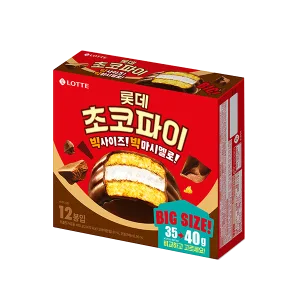
Lotte Wellfood Lotte Choco Pie
Lotte Wellfood Zero Choco Pie
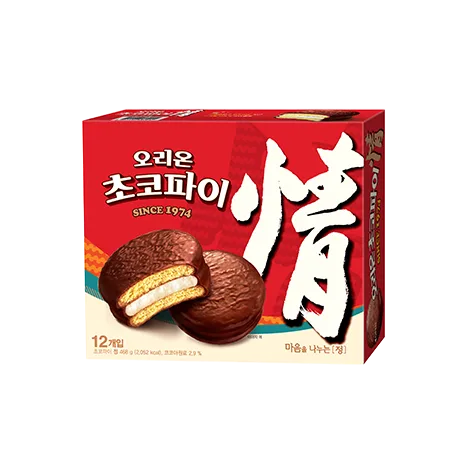
Orion Choco Pie
Orion Choco Pie

The main differences

The standard versions from Orion and Lotte Wellfood share similar nutritional profiles per 100 g, though the Lotte Wellfood version has more sodium. The ingredients lists show slight variations. Orion Choco Pie lists lactose, whole milk powder, and vegetable oil. Lotte Wellfood Lotte Choco Pie lists mixed milk powder, glycerin, and alcohol. Lotte Wellfood also makes a Zero Choco Pie, which relies on maltitol, D-maltitol, and sucralose for sweetness.

This ingredient change alters the nutritional footprint. The Lotte Wellfood Zero Choco Pie lowers the energy to 393 kcal and the sugar to 0 g per 100 g. It also increases the fat to 21.43 g per 100 g, compared to 17.5 g in the standard Lotte Wellfood version and 17.95 g in the Orion version.

Who might prefer which

Readers looking for lower sugar levels might prefer the Lotte Wellfood Zero Choco Pie. Those looking for the traditional sweet flavor might choose either the Orion Choco Pie or the standard Lotte Wellfood Lotte Choco Pie. The Orion version has slightly more protein at 5.13 g per 100 g, while the standard Lotte Wellfood version provides 5 g per 100 g. Orion Choco Pie contains 64.1 g of carbs per 100 g, and the Lotte Wellfood standard version has 65 g of carbs per 100 g.

What to check on the label

Dietary flags and allergens vary slightly between the brands. Orion Choco Pie lists milk, wheat, and egg as allergens. The two Lotte Wellfood products list wheat and egg as allergens. Orion Choco Pie carries a flag for gelatin on the label. Both Lotte Wellfood products flag gelatin and alcohol.

The lineup

  • Lotte Wellfood Lotte Choco Pie 롯데 초코파이 — The standard Lotte Wellfood version containing 37.5 g of sugar and 300 mg of sodium per 100 g.
  • Lotte Wellfood Zero Choco Pie 제로 초코파이 — A zero-sugar version made with maltitol and sucralose.
  • Orion Choco Pie 초코파이 — The standard Orion version listing milk as an allergen and containing 35.9 g of sugar per 100 g.

Nutrition and label flags, per 100 g

Every figure in the table comes from the product's own nutrition label as filed with Korea's Ministry of Food and Drug Safety (MFDS), per 100 g so packs of different sizes compare directly. An ingredient flag means that ingredient is written on the label. An empty flag means nothing of that kind is listed. It is not a certification and does not rule out shared production lines. These are the Korean-market versions; packs sold outside Korea can differ.

Productkcal
/100g
Sodium
mg
Sugar
g
Protein
g
Ingredient flagsAllergens listed
Lotte Wellfood Lotte Choco Pie
롯데 초코파이
43830037.5 5 gelatin alcohol (incl. cooking alcohol) wheat, egg
Lotte Wellfood Zero Choco Pie
제로 초코파이
3932320 4.64 gelatin alcohol (incl. cooking alcohol) wheat, egg
Orion Choco Pie
초코파이
43823135.9 5.13 gelatin milk, wheat, egg

Source: product labels filed with the Korea Ministry of Food and Drug Safety (MFDS). Values per 100 g.

More from Korean Snack Guide

Sunday, October 18, 2026

Korean Rice Cake Desserts: The 2026 Tteok Trend Taking Over Seoul

For years Koreans travelled across the country for famous bakeries. In 2026 the queue moved to rice cakes. Tteok, the chewy glutinous-rice cake Koreans have eaten for centuries, is now the dessert people line up for, and the big convenience-store chains are racing to put new versions on their shelves.

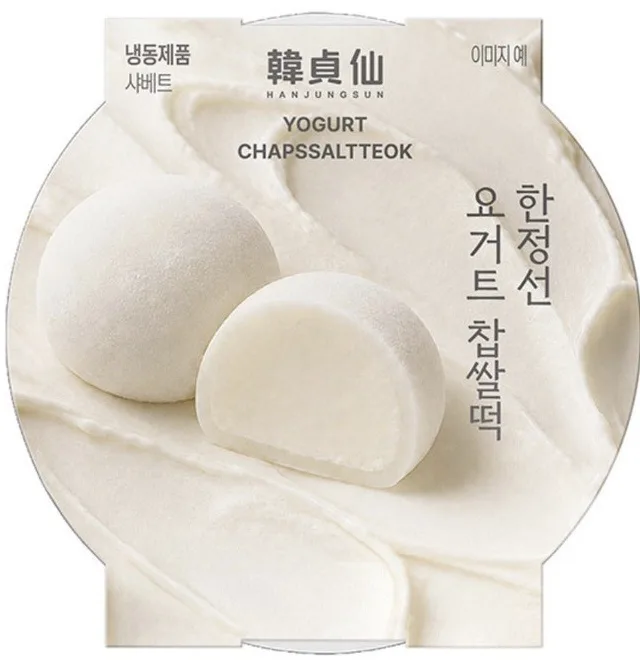
Hanjeongseon Yogurt Chapssaltteok
Hanjeongseon Yogurt Chapssaltteok 한정선 요거트 찹쌀떡
Lotte Wellfood Chewy Tteok Ice
Lotte Wellfood Chewy Tteok Ice 찰떡아이스
Lotte Wellfood Myeongga Chewy Tteok Pie
Lotte Wellfood Myeongga Chewy Tteok Pie 명가찰떡파이
Binggrae Tteok Bungeo Ssamanco
Binggrae Tteok Bungeo Ssamanco 떡붕어싸만코

From bread pilgrimages to tteok pilgrimages

Koreans have a word for crossing the country to visit famous bakeries: bbangji-sullye, the bread pilgrimage. In summer 2026 a new word joined it, tteokji-sullye (떡지순례), the tteok pilgrimage. Dong-A Ilbo reported open-runs and long waits at rice-cake dessert shops in late August. It also noted that online mentions of Buja Tteokjip, a rice-cake shop in Gongju, grew more than sixfold without the shop launching anything new.

Part of the pull is what Koreans call halmaenial: halmeoni (grandma) plus millennial. Younger Koreans are going back to the flavors their grandparents liked, such as roasted soybean powder, black sesame, mugwort and honey-fried yakgwa, and buying them in new forms.

Chapssaltteok you eat frozen

The biggest hit came from Hanjeongseon, a tteok shop that opened in Seoul's Seongsu district in 2023 and became known for not shipping its rice cakes at all. In September 2026 it teamed up with the convenience-store chain GS25 on a frozen yogurt chapssaltteok. Eaten frozen, it is closer to gelato. Left to thaw, it turns back into a soft, chewy rice cake.

Chosun Biz reported that it sold 100,000 on its first day, a record for a new ice-cream launch at GS25. A second flavor, pistachio, followed in October.

Pizza seolgi: rice cake as pizza dough

Seolgi (설기) is a fluffy white steamed rice cake, a classic for birthdays and celebrations. The newest twist uses it as a pizza base, topped with tomato sauce and cheese. Pizza Hut Korea launched its own version, and the convenience-store chain CU followed with a sliced-rice-cake take it calls Pizza Jeolpyeon. TV Chosun summed up the speed of it all: the Dubai chewy-cookie craze faded within about six months, and pizza seolgi is next in line.

Rice cake in ice cream and snacks

Korea's snack makers have hidden chewy tteok inside familiar products for years, and 2026 gave those lines new life. Lotte Wellfood's Chewy Tteok Ice wraps ice cream in a layer of glutinous rice cake. A black-sesame injeolmi version, made with a tvN variety show, sold out its first run of 500,000 early. Lotte also refreshed Myeongga Chewy Tteok Pie, its long-running pie with chapssaltteok inside, with new flavors.

Yakgwa and "yakketing"

Yakgwa (약과) is a flower-shaped cookie of wheat flour, honey and sesame oil, fried and soaked in syrup. Famous handmade yakgwa became so hard to get that Koreans coined "yakketing", yakgwa plus ticketing, after the race to buy concert tickets. In September 2026 the chain emart24 launched an exclusive mini yakgwa from Janginhangwa, one of the names behind that rush.

Butter tteok, a rich, buttery rice-cake dessert, is also on Korea's 2026 trend lists. EconomyTalk reported that GS25 was among the first chains to release one.

The flavors to know

You will see these words on Korean packaging this year:

Injeolmi (인절미): rice cake rolled in roasted soybean powder, nutty and lightly sweet. The flavor now shows up in bingsu bread, chocolate, Pepero and snack cakes.
Heugimja (흑임자): black sesame, roasted and ground. Several café chains added black-sesame lattes and desserts this autumn.
Ssuk (쑥): mugwort, an herbal green flavor common in traditional rice cakes.
Pat (팥): sweet red bean, the classic filling of chapssaltteok.

Chapssaltteok vs mochi

Both are made from glutinous rice, so they share that soft, stretchy chew. Chapssaltteok is the Korean name, and the classic version is filled with sweet red bean. The 2026 versions break from that: yogurt cream, pistachio, fruit and fresh cream fillings, and some are made to be eaten frozen.

How to try them

Most of these launches are limited runs, and they move fast. TV Chosun noted that Korean dessert trend cycles now run shorter than three months. If you are visiting Korea, the convenience-store chains GS25, CU and emart24 have been the quickest to bring tteok desserts from famous shops to their freezers and shelves, so the dessert aisle is the first place to look.

Sales figures are as announced by the companies and reported in Korean media. Where meokbogo.com lists label details for these products, they come from filings with Korea's Ministry of Food and Drug Safety (MFDS).

  • Dong-A Ilbo, "빵지순례 다음은 떡지순례", 2026-08-28: donga.com
  • Chosun Biz, Hanjeongseon yogurt chapssaltteok first-day sales, 2026-09-04: biz.chosun.com
  • Newsis, GS25 pistachio chapssaltteok, 2026-10-05: newsis.com
  • Meokbogo ORIGINAL, the Hanjeongseon story (Korean): meokbogo.com
  • Asia Economy, CU Pizza Jeolpyeon, 2026-10-06: asiae.co.kr
  • Newsprime, Pizza Hut pizza seolgi, 2026-10-08: newsprime.co.kr
  • TV Chosun, trend cycles and pizza seolgi, 2026-09-16: tvchosun.com
  • TF Media, Chewy Tteok Ice black-sesame injeolmi sellout: tfmedia.co.kr
  • Dong-A Ilbo, Lotte's long-running snacks in new flavors, 2026-07-14: donga.com
  • etnews, emart24 Janginhangwa mini yakgwa, 2026-09-09: etnews.com
  • EconomyTalk, "두쫀쿠 다음은 떡지순례", 2026-09-20: economytalk.kr
  • Newspim, black-sesame autumn menus and the halmaenial trend, 2026-08-27: newspim.com

More from Korean Snack Guide

Chapagetti vs Jin Jjajang: Korean Black Bean Noodles Compared

Nongshim Chapagetti and Ottogi Jin Jjajang offer variations of Korean black bean sauce instant noodles. When comparing the numbers per 100 g, Nongshim Chapagetti Big Bowl Noodle is the heaviest and saltiest option at 447 kcal and 992 mg of sodium. Nongshim Chapagetti Double Black is the sweetest with 6.9 g of sugar, while Ottogi Jin Jjajang is the lightest with 393 kcal per 100 g. The ingredient lists also differ. Chapagetti Big Bowl includes wheat flour, potato starch, palm oil and soy protein, whereas Jin Jjajang is based on fried noodles and sauce.

Instant jjajang noodles are a pantry staple in Korea, loosely inspired by the popular restaurant dish jjajangmyeon. Readers outside of Korea should note that packs sold outside Korea can differ from the domestic items detailed here.

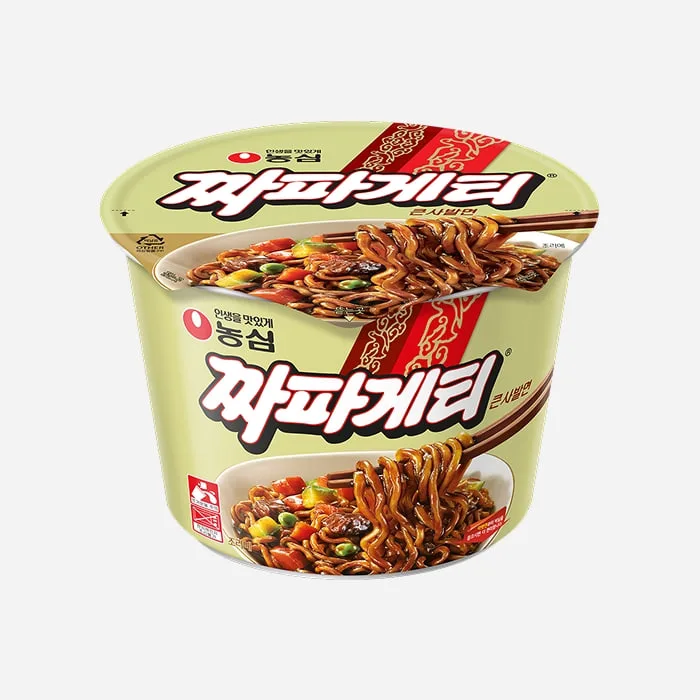
Nongshim Chapagetti Big Bowl Noodle
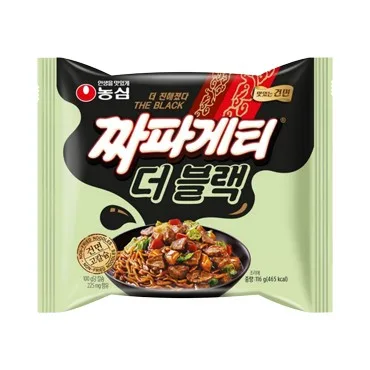
Nongshim Chapagetti Double Black
Nongshim Sichuan Chapagetti
Ottogi Jin Jjajang
Ottogi Jin Jjajang

The main differences

The Nongshim line provides several takes on the black bean flavor. Nongshim Sichuan Chapagetti brings a filling profile and lists flavored oil alongside its wheat flour and potato starch base. Nongshim Chapagetti Double Black has 71.55 g of carbs and 9.48 g of fat per 100 g, leaning on noodles and flavored oil for a salty and savory taste.

Ottogi Jin Jjajang provides a hearty option built on fried noodles and sauce. It carries 8.89 g of protein and 5.19 g of sugar per 100 g.

Who might prefer which

Readers looking for a salty and savory noodle might choose Nongshim Chapagetti Big Bowl Noodle or Nongshim Chapagetti Double Black. Those who prefer a filling option with lower sodium might favor Nongshim Sichuan Chapagetti, which has 788 mg of sodium per 100 g, or Ottogi Jin Jjajang, which sits at 815 mg per 100 g.

What to check on the label

Label ingredients vary across these options. Nongshim Chapagetti Big Bowl Noodle and Nongshim Sichuan Chapagetti list wheat allergens. The Big Bowl version also lists soy.

The labels for Ottogi Jin Jjajang and Nongshim Chapagetti Double Black list no specific allergens. None of the products in this group carry additional label flags.

The lineup

  • Nongshim Chapagetti Big Bowl Noodle 짜파게티큰사발면 — The heaviest and saltiest option in this group, featuring potato starch, processed fruit and vegetable products and soy protein.
  • Nongshim Chapagetti Double Black 짜파게티더블랙 — The sweetest variation per 100 g, relying on noodles and flavored oil to deliver a salty and savory taste.
  • Nongshim Sichuan Chapagetti 사천짜파게티 — A filling take that lists flavored oil, potato starch and wheat flour, with the lowest sodium level per 100 g.
  • Ottogi Jin Jjajang 진짜장 — A hearty option made with fried noodles that offers the lowest calorie count and highest protein per 100 g.

Nutrition and label flags, per 100 g

Every figure in the table comes from the product's own nutrition label as filed with Korea's Ministry of Food and Drug Safety (MFDS), per 100 g so packs of different sizes compare directly. An ingredient flag means that ingredient is written on the label. An empty flag means nothing of that kind is listed. It is not a certification and does not rule out shared production lines. These are the Korean-market versions; packs sold outside Korea can differ.

Productkcal
/100g
Sodium
mg
Sugar
g
Protein
g
Ingredient flagsAllergens listed
Nongshim Chapagetti Big Bowl Noodle
짜파게티큰사발면
4479926.5 8.13 none listed wheat, soy
Nongshim Chapagetti Double Black
짜파게티더블랙
4019666.9 7.76 none listed —
Nongshim Sichuan Chapagetti
사천짜파게티
4387885.84 8.03 none listed wheat
Ottogi Jin Jjajang
진짜장
3938155.19 8.89 none listed —

Source: product labels filed with the Korea Ministry of Food and Drug Safety (MFDS). Values per 100 g.
More from Korean Snack Guide

Saturday, October 17, 2026

Jin Ramen vs Neoguri: Calories, Sodium and Ingredients Compared

Comparing Nongshim Mild Neoguri to Ottogi Jin Ramen Mild Flavor and Ottogi Jin Ramen Spicy Flavor reveals distinct nutritional differences per 100 g. Nongshim Mild Neoguri is slightly heavier at 421 kcal and sweeter with 5 g of sugar. The two Jin Ramen varieties are saltier per 100 g, with the mild version at 1567 mg of sodium and the spicy at 1550 mg, compared to the 1233 mg found in the Neoguri.

The ingredient lists reflect the separate directions of these Korean instant noodles. Nongshim Mild Neoguri lists other processed seafood products alongside potato starch and wheat flour. Ottogi Jin Ramen Mild Flavor and Ottogi Jin Ramen Spicy Flavor both list fried noodles, complex seasoning food, and fruit and vegetable processed products.

Nongshim Mild Neoguri
Ottogi Jin Ramen Mild Flavor
Ottogi Jin Ramen Spicy Flavor

Main differences in flavor and ingredients

The core difference lies in the flavor base and taste tags. Nongshim Mild Neoguri carries a light taste tag and builds its profile on seafood ingredients and a noodle base that includes potato starch. Ottogi Jin Ramen Mild Flavor and Ottogi Jin Ramen Spicy Flavor are both tagged as hearty. The spicy version adds a spicy taste tag to its profile. Fat content remains identical across all three at 12.5 g per 100 g.

Who might prefer which

Readers looking for a lower sodium intake per 100 g might lean toward Nongshim Mild Neoguri. Those who prefer more protein per 100 g can look to Ottogi Jin Ramen Mild Flavor with 10 g, or the spicy version with 9.17 g, while Neoguri offers 7.5 g. Carb counts also vary, with Neoguri at 70 g per 100 g and the Jin Ramen options sitting at 65.83 g and 66.67 g.

What to check on the label

Keep in mind that packs sold outside Korea can differ from the domestic versions. When checking the Korean label, Nongshim Mild Neoguri lists wheat as an allergen. It also lists eggshell calcium, palm oil, and various processed edible oils and fats. The two Jin Ramen packets list fried noodles, complex seasoning food, and fruit and vegetable processed products.

The lineup

  • Nongshim Mild Neoguri 순한 너구리 — A light seafood-style noodle that contains 421 kcal and 5 g of sugar per 100 g, featuring processed seafood products and potato starch.
  • Ottogi Jin Ramen Mild Flavor 진라면 순한맛 — A hearty noodle soup with 1567 mg of sodium and 10 g of protein per 100 g, listing fruit and vegetable processed products.
  • Ottogi Jin Ramen Spicy Flavor 진라면 매운맛 — The spicy alternative in the Jin Ramen line, offering 1550 mg of sodium and 9.17 g of protein per 100 g.

Nutrition and label flags, per 100 g

Every figure in the table comes from the product's own nutrition label as filed with Korea's Ministry of Food and Drug Safety (MFDS), per 100 g so packs of different sizes compare directly. An ingredient flag means that ingredient is written on the label. An empty flag means nothing of that kind is listed. It is not a certification and does not rule out shared production lines. These are the Korean-market versions; packs sold outside Korea can differ.

Productkcal
/100g
Sodium
mg
Sugar
g
Protein
g
Ingredient flagsAllergens listed
Nongshim Mild Neoguri
순한 너구리
42112335 7.5 none listed wheat
Ottogi Jin Ramen Mild Flavor
진라면 순한맛
41715673.33 10 none listed —
Ottogi Jin Ramen Spicy Flavor
진라면 매운맛
41715503.83 9.17 none listed —

Source: product labels filed with the Korea Ministry of Food and Drug Safety (MFDS). Values per 100 g.
More from Korean Snack Guide

Friday, October 16, 2026

Shin Ramyun Black vs Red vs Gold: What Changes on the Label

Nongshim Shin Ramyun Gold is the heaviest at 432 kcal per 100 g, while Nongshim Shin Ramyun has the highest sodium at 1492 mg per 100 g. Nongshim Shin Ramyun Black is the sweetest, containing 5.97 g of sugar per 100 g. All four products are spicy beef-flavored instant ramen. The original lists fried noodles, complex seasoning, and processed fruit and vegetable products. The Black, Gold, and The Red versions share a base of wheat flour, potato starch, and palm oil alongside various seasonings.

These details apply to the Korean-market versions. Packs sold outside Korea can differ.

Nongshim Shin Ramyun
Nongshim Shin Ramyun Black
Nongshim Shin Ramyun Gold
Nongshim Shin Ramyun The Red

Main differences in the lineup

The original Nongshim Shin Ramyun keeps its ingredient list short, noting fried noodles, complex seasoning, and processed fruit and vegetable products. The premium versions expand on this base. Nongshim Shin Ramyun Black, Gold, and The Red use wheat flour, potato starch, and palm oil, adding ingredients like modified starch, calcium eggshell, polyphosphate, and vitamin B2. Gold includes flavored oil, which pushes its fat content to 15.2 g per 100 g.

Nongshim Shin Ramyun The Red matches Gold in sodium with 1432 mg per 100 g but has slightly less fat at 13.6 g per 100 g. All four versions carry the spicy and filling taste tags.

Choosing your style

Those looking for less sodium per 100 g might prefer Nongshim Shin Ramyun Black, which has 1328 mg. However, Black also has the highest sugar content at 5.97 g per 100 g and the most carbohydrates at 67.91 g per 100 g. People looking for the lowest fat content can look to the original, which sits at 13.33 g per 100 g.

Protein levels vary slightly across the range. Nongshim Shin Ramyun Black leads with 8.96 g per 100 g, and Nongshim Shin Ramyun The Red follows closely with 8.8 g per 100 g.

What to check on the label

Nongshim Shin Ramyun Black, Gold, and The Red all list wheat as an allergen. The original Nongshim Shin Ramyun does not list any allergens on its label.

The lineup

  • Nongshim Shin Ramyun 신라면 — The original version has the highest sodium at 1492 mg per 100 g and a shorter ingredient list based on fried noodles.
  • Nongshim Shin Ramyun Black 신라면 블랙 — The sweetest of the group with 5.97 g of sugar per 100 g, and the lowest sodium at 1328 mg per 100 g.
  • Nongshim Shin Ramyun Gold 신라면 골드 — The heaviest in calories and fat, reaching 432 kcal and 15.2 g of fat per 100 g due to the addition of flavored oil.
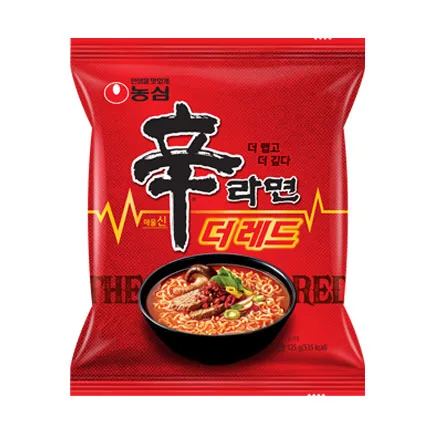
  • Nongshim Shin Ramyun The Red 신라면 더레드 — A version that matches Gold in sodium but keeps fat slightly lower at 13.6 g per 100 g.

Nutrition and label flags, per 100 g

Every figure in the table comes from the product's own nutrition label as filed with Korea's Ministry of Food and Drug Safety (MFDS), per 100 g so packs of different sizes compare directly. An ingredient flag means that ingredient is written on the label. An empty flag means nothing of that kind is listed. It is not a certification and does not rule out shared production lines. These are the Korean-market versions; packs sold outside Korea can differ.

Productkcal
/100g
Sodium
mg
Sugar
g
Protein
g
Ingredient flagsAllergens listed
Nongshim Shin Ramyun
신라면
41714923.33 8.33 none listed —
Nongshim Shin Ramyun Black
신라면 블랙
42913285.97 8.96 none listed wheat
Nongshim Shin Ramyun Gold
신라면 골드
43214324 8 none listed wheat
Nongshim Shin Ramyun The Red
신라면 더레드
42814324 8.8 none listed wheat

Source: product labels filed with the Korea Ministry of Food and Drug Safety (MFDS). Values per 100 g.
More from Korean Snack Guide

Neoguri Ramen: Mild and Spicy Seafood, Cup and Bowl Compared

This page covers five Neoguri versions from Nongshim. Four are soup-style: Nongshim Mild Neoguri, Nongshim Mild Neoguri Cup, Nongshim Ne...